
For years the advice was simple, and it was always the same. If you want to build muscle, you eat big and bulk. If you want to lose fat, you cut. Pick one, because you can’t do both at once. That logic isn’t crazy, since building muscle usually wants extra calories and losing fat wants fewer, and you can’t run a surplus and a deficit in the same breath.
But the “pick one” rule has more give in it than people think. Losing fat while building muscle has a name, body recomposition, and for a lot of guys it’s not only possible, it’s the smarter way to start. The catch is that it works far better in some situations than others, and most of the hype skips that part. So before you reorganize your whole diet around it, here’s who it actually works for, how it works, and what to do.

Who Body Recomposition Actually Works For
Recomposition leans on one simple idea: if your body has fat to spare, it can pull energy from those stores to build muscle, even while you’re eating a little less overall. That’s why it works best for three kinds of people.
If you’re new to lifting, you’re in the best position you’ll ever be in. New lifters build muscle quickly, and the body is primed enough that it’ll add muscle and shed fat at the same time on nothing more than consistent training and a sensible diet.
If you’re carrying extra body fat, say somewhere north of 20 percent, you’ve got plenty of stored energy on hand. Your body can run a small deficit and still have more than enough to build with, so the two goals stop fighting each other.
And if you used to be in shape but fell off, after an injury, a busy stretch, or a few years away, you’ll come back faster than someone starting cold. Your body remembers the muscle it had and rebuilds it quickly, a head start people call muscle memory.
Here’s the honest part the hype leaves out. If you’re already lean and you’ve been training hard for years, recomposition gets slow and frustrating. At that point your body has no spare energy to pull from and you’ve already collected the easy muscle, so you’re usually better off picking a lane, a clean bulk or a controlled cut, instead of chasing both.
Recomposition isn’t magic. It’s a specific tool that fits some situations and not others.
How You Lose Fat and Build Muscle at Once
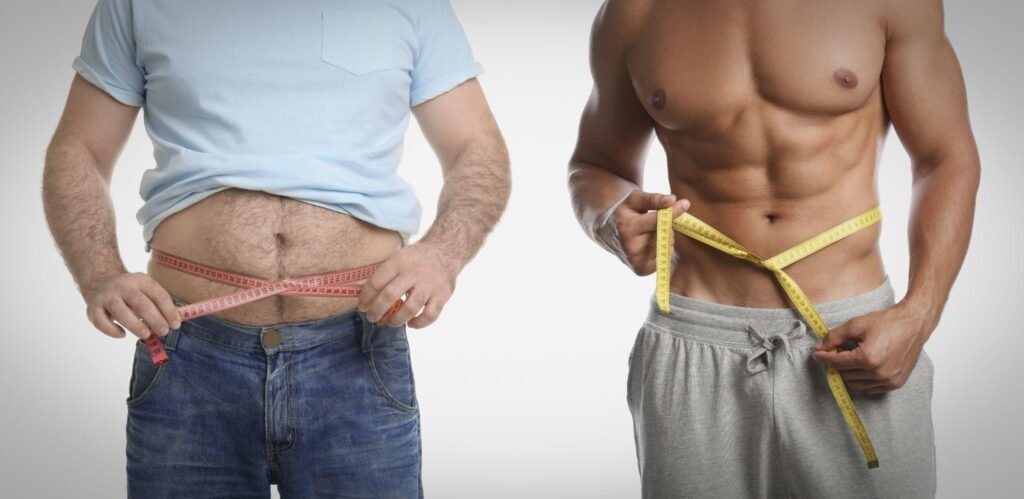
Three things make it work, and they only work together. You eat enough protein, you train with real resistance, and you run a slight calorie deficit. Drop any one of them and the whole thing stalls.
The deficit is what pulls fat off. The protein and the lifting are what tell your body to keep, and add, muscle while that’s happening. Without enough protein and a reason to hold onto muscle, a deficit will burn through both fat and muscle, and you’ll end up smaller but still soft, which is the exact outcome nobody’s after.
The word that matters most here is slight. A small deficit, not a crash diet. Cut too hard and your body starts treating muscle as something it can afford to lose, which defeats the point. A gentle deficit gives your body enough to hold onto muscle while the fat comes off slowly.
Eating for Recomposition
Protein is the part you don’t get to skip. Aim for about one gram per pound of body weight per day. If you weigh 180 pounds, that’s roughly 180 grams, spread across your meals rather than crammed into one. Chicken, beef, eggs, fish, dairy, and a protein shake when real food isn’t handy will get you there.
For the deficit, you want a small one, somewhere around 200 to 300 calories below what it takes to maintain your weight. That’s enough to lose fat at a steady pace without starving the muscle you’re trying to build. If you’re not sure what your maintenance number is, track what you normally eat for a week while your weight holds flat, then trim a couple hundred calories off that.
After protein and total calories, the rest is less fussy than the internet makes it sound. Fill the gap with a sensible mix of carbs and fats, lean toward whole foods over processed ones because they keep you full on fewer calories, and get some fiber in for the same reason. A rough split that works well for recomposition looks like this for a 180-pound man eating around 2,000 calories on a training day.
Treat that as a starting point, not a rulebook. Bodyweight, activity level, and how hard you train all move the numbers around.
Training That Builds and Holds Muscle

You can eat perfectly and still get nowhere without the training half, because lifting is the signal that tells your body the muscle is worth keeping. Resistance training is the priority, three to four sessions a week, built around compound lifts that work several muscles at once. Squats, deadlifts, presses, and rows give you the most muscle and the most calorie burn per move, which is exactly what you want when you’re doing two jobs at the same time.
The rule that drives all of it is progressive overload, which just means asking a little more of yourself over time. Add a bit of weight, get an extra rep, or add a set as the weeks go on. If the work never gets harder, your muscles have no reason to grow.
Cardio has a place, but a smaller one than it usually gets. A few moderate sessions a week help with fat loss and keep your heart healthy, but you don’t need to run yourself into the ground. Hours of cardio on top of a deficit is a good way to lose muscle, not build it, so keep it reasonable and let lifting do the real work.
Recovery Is Where It Happens
Muscle isn’t built in the gym, it’s built while you recover from the gym. The training breaks the muscle down, and the rebuilding happens after, on your rest days and especially in your sleep. Skimp on either and you cap your own results no matter how good the workouts are.
Sleep is the piece that’s underrated the most. Short nights raise stress hormones that make it harder to lose fat and harder to hold muscle, so it’s working against both of your goals at once. Get enough of it, take your rest days seriously, and you give the food and the training a chance to actually do something.
How to Track Progress Without the Scale
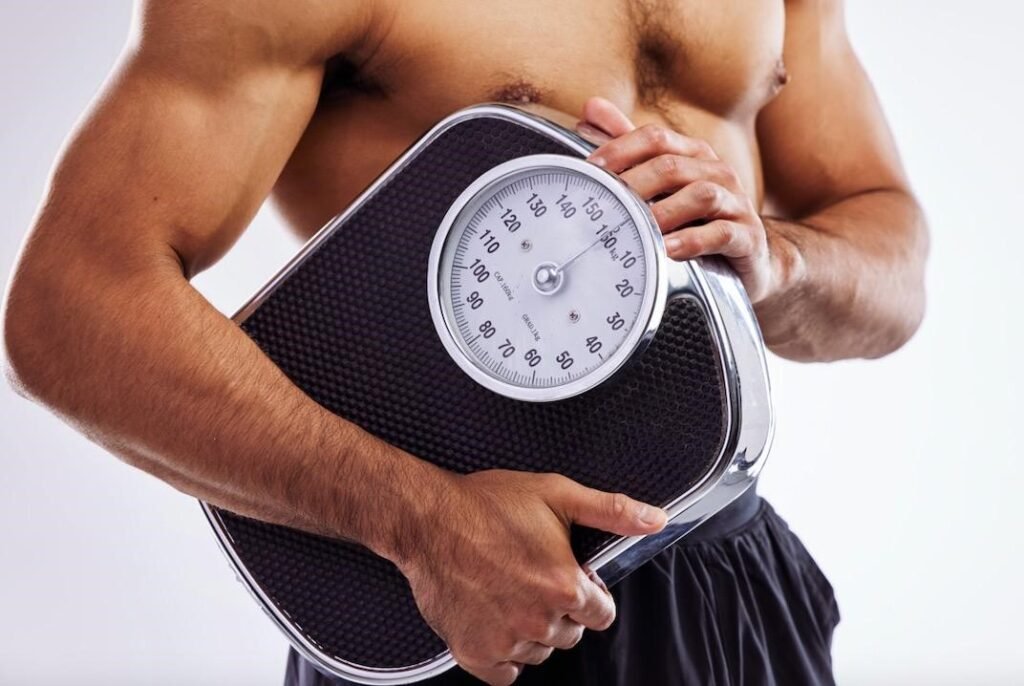
This is the part that trips people up, so it’s worth saying plainly: the scale is close to useless for recomposition. You’re losing fat and adding muscle at the same time, so your weight can sit still for weeks while your body changes underneath it. Watch the scale alone and you’ll think nothing’s happening right when it’s working.
Track the things that actually show the change instead. Measure your waist, chest, and arms with a tape every couple of weeks. Take photos in the same light and the same spot, since you live with your reflection every day and won’t notice the slow shift without them. Pay attention to how your clothes fit, and keep an eye on your numbers in the gym, because getting stronger is a reliable sign you’re holding and building muscle. Together those tell you far more than a number that ignores the difference between fat and muscle.
What to Actually Expect
Recomposition is real, but it’s slow, and that’s the trade. You won’t watch fat fall off week to week the way an aggressive cut might show, because the deficit is gentle on purpose and the muscle is coming in at the same time. Figure on fat loss somewhere around half a percent to one percent of your bodyweight a week, with the visible payoff showing up over months rather than days.
That’s not a knock on it, it’s the reason it works. The slow, steady version is the one that holds your muscle and the one you can actually live with, instead of the crash that leaves you smaller and weaker and back where you started a few months later. Eat your protein, lift a little heavier over time, sleep, and let it run. The body you’re after is built underneath the one you’ve got, and this is how it shows up.